![Costa Farms Corporate Logo EST (WHITE).png]](https://help.costafarms.com/hs-fs/hubfs/Costa%20Farms%20Corporate%20Logo%20EST%20(WHITE).png?height=40&name=Costa%20Farms%20Corporate%20Logo%20EST%20(WHITE).png)
 Bringing houseplants into your home is one of the easiest ways to add life, texture, and beauty to your space—but if you share your home with cats or dogs, choosing pet-friendly plants becomes a little more important.
The good news? You don’t have to choose between loving plants and loving pets.
There are many beautiful houseplants commonly considered non-toxic to cats and dogs. But it’s also important to understand what “pet-friendly” actually means, because the term is often oversimplified online.
This guide breaks down:
• What “pet-friendly” really means
• Why some plants are considered toxic
• Popular houseplants to avoid
• Pet-friendly alternatives
• Tips for safely keeping pets and plants together
• How to check plant safety before bringing a new plant home
________________________________________________________________________________
What Does “Pet-Friendly” Actually Mean?
The term pet-friendly is often used loosely, but in most cases it simply means a plant is considered non-toxic to pets based on currently available data.
However, non-toxic does not mean:
• Safe to eat
• Completely risk-free
• Impossible to cause a reaction
The ASPCA notes that even non-toxic plants can still cause mild digestive upset if pets chew or ingest enough plant material.
In addition:
• Individual pets can react differently
• Fertilizers, fungicides, or insecticides used on the plant may pose additional concerns
• Some pets are simply more sensitive than others
The most accurate way to think about it is this:
Pet-friendly plants reduce risk — they do not eliminate it entirely.
________________________________________________________________________________
Why Some Houseplants Are Toxic to Pets
Many popular houseplants naturally developed defenses to discourage animals from eating them.
One of the most common defenses is found in a large group of plants called aroids.
Aroids contain:
• Calcium oxalate crystals
• Tiny needle-like structures called raphides
When chewed, these crystals can:
• Irritate the mouth and throat
• Cause drooling or pawing at the mouth
• Trigger vomiting or discomfort
This is why pets usually stop chewing these plants very quickly—the irritation is immediate and unpleasant.
In most cases, these plants are considered:
• irritating rather than deadly
• uncomfortable rather than highly dangerous
Still, they are best avoided in homes with curious pets.
________________________________________________________________________________

Popular Houseplants That Are NOT Pet-Friendly
Unfortunately, many of today’s trendiest and easiest-care houseplants are not considered pet safe.
These commonly include:
• Pothos (Epipremnum aureum)
• Philodendron
• Monstera
• Peace Lily (Spathiphyllum)
• Dieffenbachia
• Aglaonema (Chinese Evergreen)
• ZZ Plant (Zamioculcas zamiifolia)
• Alocasia
• Syngonium
• Rhaphidophora
• Anthurium
Most of these belong to the aroid family and contain calcium oxalate crystals.
These plants remain incredibly popular because they’re often:
• adaptable
• forgiving
• easy to grow indoors
But for homes with pets that frequently chew foliage, safer alternatives may be a better fit. ________________________________________________________________________________
Pet-Friendly Alternatives to Popular Plants
If you love the look of trendy houseplants but want lower-risk options, there are plenty of beautiful alternatives.
If You Like… Try Instead
Monstera Calathea orbifolia
Pothos Spider Plant
Philodendron Peperomia
Peace Lily Bird’s Nest Fern
ZZ Plant Ponytail Palm
If you're in need of a larger statement plant: Butterfly Palm, Bamboo Palm, Cat Palm, Ponytail palm, or Majesty Palm
________________________________________________________________________________
Pet-Friendly Houseplants to Consider
Ferns
• Boston Fern
Ferns add lush texture and work especially well in humid spaces like bathrooms.
________________________________________
Palms
• Cat Palm
True palms are among the best options for pet-friendly statement plants indoors. Avoid Sago palms as they are not true palms and are toxic.
________________________________________________________________________________
Prayer Plant Family
• Calathea
• Maranta
Known for their colorful patterned foliage, these plants are popular for adding visual interest without increasing risk.
________________________________________________________________________________
Orchids and Bromeliads
Excellent choices for bringing color into pet-friendly homes. ________________________________________________________________________________
Pet-Friendly Succulents
Not all succulents are safe for pets, but these are commonly considered non-toxic:
________________________________________________________________________________
Other Popular Pet-Friendly Plants
• Pilea
• Fittonia (commonly called nerve plant)
These plants are widely loved because they combine:
• ease of care
• adaptability
• lower toxicity concerns
________________________________________________________________________________
Best Pet-Friendly Plants By Situation
Best Low-Light Options
Best Hanging Plants
.jpg?width=670&height=447&name=Cat%20in%20Palm%20(1).jpg)
Best Large Statement Plants
Best Colorful Foliage
• Calathea
• Fittonia
Best Beginner-Friendly Plants
________________________________________________________________________________
Tips for Keeping Pets and Plants Safe Together
Even non-toxic plants are best kept out of reach when possible.
Try:
• shelves
• hanging planters
• plant stands
________________________________________________________________________________
2. Understand Your Pet’s Behavior
Different pets interact with plants differently.
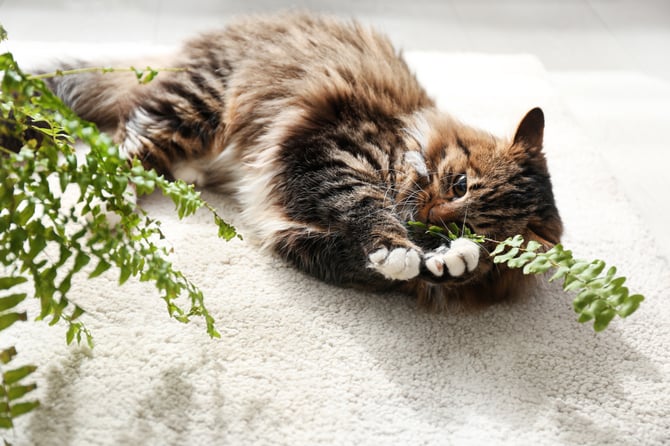
Cats often:
• chew thin or grassy foliage
• play with trailing vines
• target dangling leaves
Dogs are more likely to:
• dig in containers
• knock over pots
• chew accessible foliage
Understanding your pet’s habits helps you choose plants more successfully.
________________________________________________________________________________
3. Be Careful With Plant Care Products
Sometimes the plant itself isn’t the biggest issue.
Fertilizers, fungicides, and insecticides may pose additional concerns for pets—even on non-toxic plants.
Always:
• follow product directions carefully
• avoid overapplication
• keep treatments away from curious pets
________________________________________________________________________________
4. Provide Safe Alternatives
Some pets simply enjoy chewing greenery.
Consider offering:
• pet grass
• cat grass
• designated chew-safe plants
This may reduce interest in your houseplants.
________________________________________________________________________________
Common Myths About Pet-Friendly Plants
“Non-toxic means completely safe.”
False. Even non-toxic plants can still cause stomach upset if eaten.
“All succulents are pet safe.”
False. Some succulents can be toxic, so always verify individual varieties.
“Peace lilies are true lilies.”
False. Peace lilies are not true lilies, but they are still irritating to pets because of calcium oxalate crystals.
“A toxic plant always means deadly.”
False. Many common houseplants are considered toxic because they cause irritation—not because they are life-threatening.
________________________________________________________________________________
What To Do If Your Pet Eats a Plant
If your pet chews or eats a houseplant:
- Remove plant material from the mouth
- Watch for symptoms like drooling or vomiting
- Contact your veterinarian if symptoms show up
- Use the ASPCA Animal Poison Control resource if needed
When possible:
• identify the plant
• keep the plant label
• know the botanical name
This helps professionals provide faster guidance.
________________________________________________________________________________
How to Check If a Plant Is Safe for Pets
Before bringing home a new plant, it’s always smart to verify its safety. The best resource is the ASPCA Toxic and Non-Toxic Plant Database.
For best results:
• check both the common and botanical name
• verify whether the plant is toxic to cats, dogs, or both
• when in doubt, assume caution first
________________________________________________________________________________
Frequently Asked Questions
Are all non-toxic plants completely safe for pets?
No. Non-toxic plants are less likely to cause serious harm, but eating plant material can still result in digestive upset.
Are Monstera and Pothos safe for pets?
No. Both contain calcium oxalate crystals that can cause irritation and discomfort if chewed.
What are some of the safest houseplants for pets?
Spider plants, true palms, calathea, peperomia, orchids, and many ferns are commonly considered lower-risk options.
Can I keep toxic plants if they’re out of reach?
Sometimes, yes—but this depends entirely on your pet. Some cats and dogs are extremely determined climbers or chewers.
Are snake plants pet friendly?
No. Snake plants are considered mildly toxic to pets if ingested.
________________________________________________________________________________
Final Thoughts
You don’t have to choose between a beautiful indoor jungle and a happy pet-friendly home. The key is simply understanding:
• which plants carry greater risk
• how plant toxicity works
• how your own pets behave around plants
Many popular houseplants are unfortunately not considered pet safe—but there are still plenty of beautiful, easy-care alternatives available. With a little planning and informed plant selection, you can create a home that feels comfortable, green, and welcoming for every member of the family.